
SMART ECO-SHELTER: Textile Architecture for Climate-Resilient Farming
EXECUTIVE CASE STUDY & VERIFIED INNOVATION
Nominated for the Helen Hamlyn Award and selected for the Global Creative Graduate Showcase 2025.
Project Overview
This interdisciplinary research project and design prototype, developed as part of my Master’s in Environmental Architecture at the Royal College of Art (RCA), offers innovative, regenerative solutions for climate-resilient farming and land management. The work focuses on enhancing economic viability and long-term ecosystem health by integrating principles of the circular economy.
As the Lead Researcher & Environmental Architect for this project, I developed a dynamic, temporary climate shelter system using natural, locally sourced materials. Furthermore, I created a comprehensive ‘know-how’ guide specifically for small farms and illustrated how to effectively integrate ESG principles into their agricultural practices.
The Climate Challenge (The Problem)
The project is inspired by the critical failure of natural systems, such as the drought-stricken Montado ecosystem in Portugal, where mature ‘mother trees’ can no longer effectively protect new saplings. This results in high attrition rates, threatening biodiversity and long-term land productivity. The design intervention was necessary to create a temporary, adaptive solution to rapidly restore a healthy microclimate in the absence of mature canopy cover.
Innovation: The ‘Second Canopy’ and Regenerative Materials
The Smart Eco-Shelter functions as a 'second canopy', providing both shade and critical moisture to vulnerable saplings. The innovation is rooted in its material science and function:
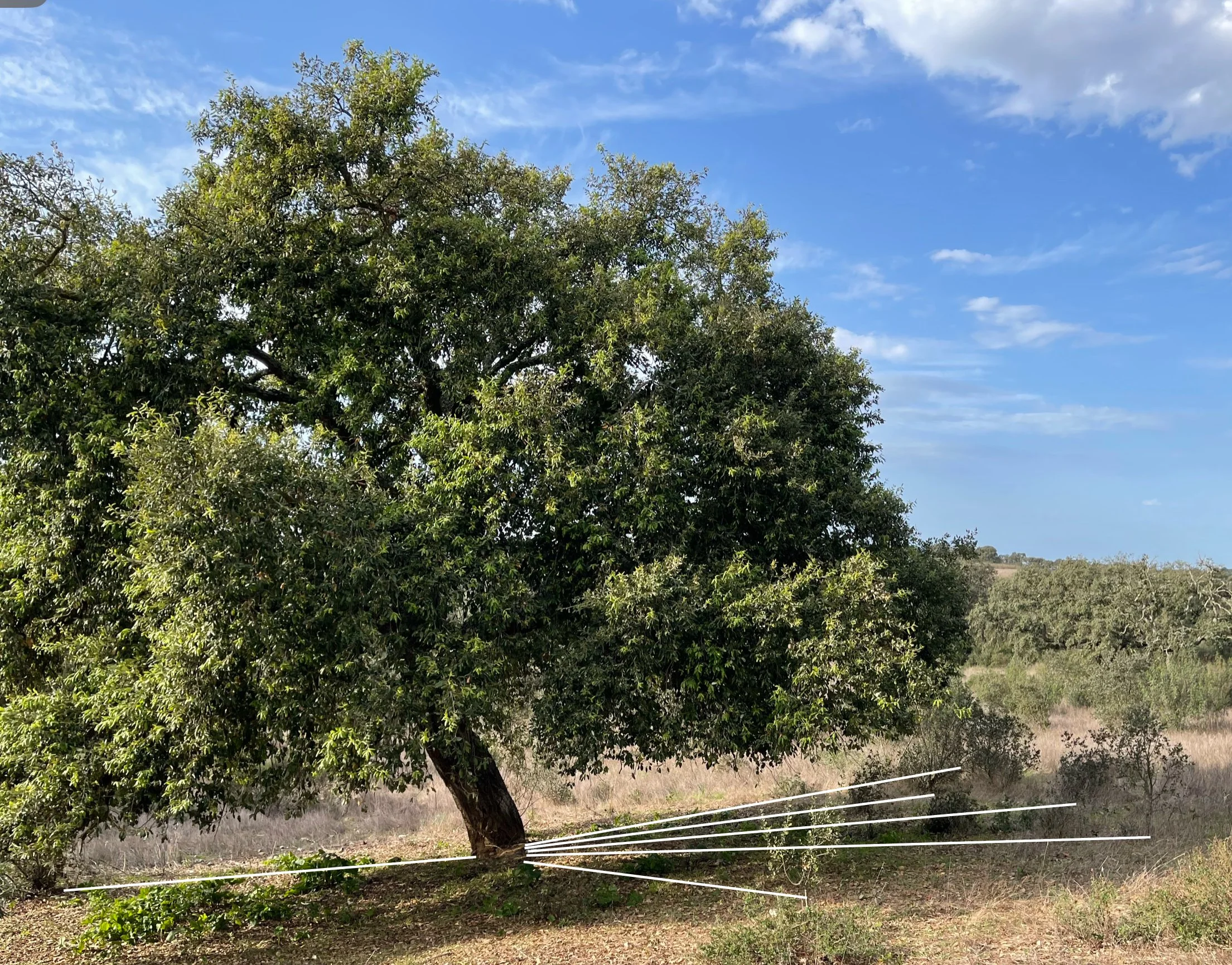
The mature tree serves as a natural climate shelter, establishing the vital microclimate necessary for the survival and initial thriving of young saplings within the ecosystem.
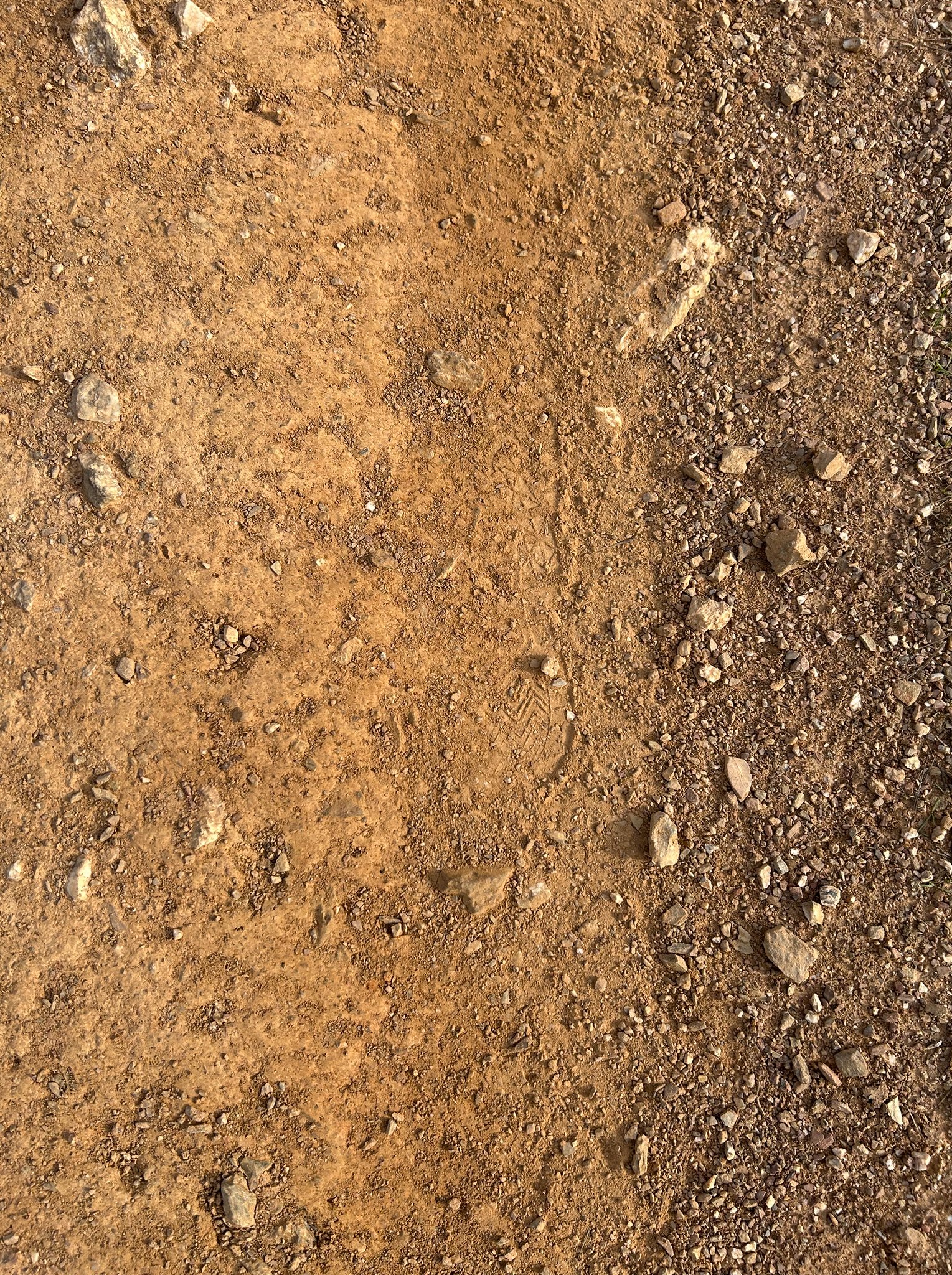
Increased distance between mature trees causes ecological fragmentation: the resulting disruption of the microclimate balance leads to barren, desiccated soil patches where young saplings cannot successfully take root or survive.
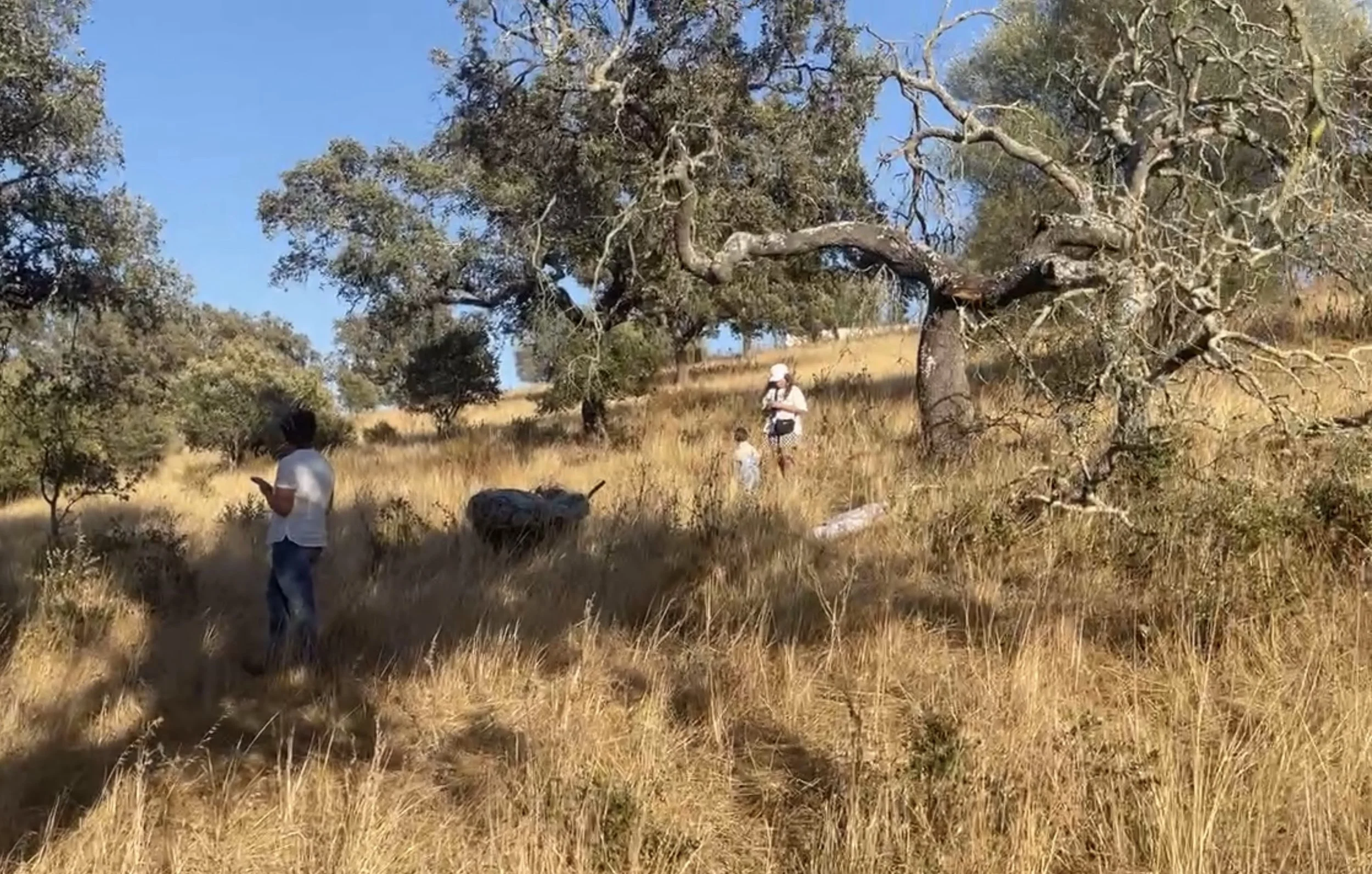
Without a canopy or shelter, the Montado ecosystem suffers from intense solar radiation and heat stress, significantly reducing the viability of new, young life and threatening long-term land regeneration.

Under the Smart Eco-Shelter, a favourable microclimate is restored. The textile provides effective shade and reduces topsoil temperature, protecting young saplings and allowing for successful establishment and survival.
Adaptive Structure
The temporary, scalable, and easy-to-deploy structure allows small farms to quickly install protection where it is most needed, ensuring flexibility and accessibility.
Circular Materiality
The core textile is woven from agricultural waste streams (low-grade wool and straw), chosen for their ability to naturally decompose and return nutrients to the soil when the shelter’s functional life is complete.
Hygroscopic & Cooling
The textile passively collects dew and atmospheric moisture. This moisture is then slowly released into the ground, directly mitigating drought stress and lowering the ground temperature through evaporative cooling.
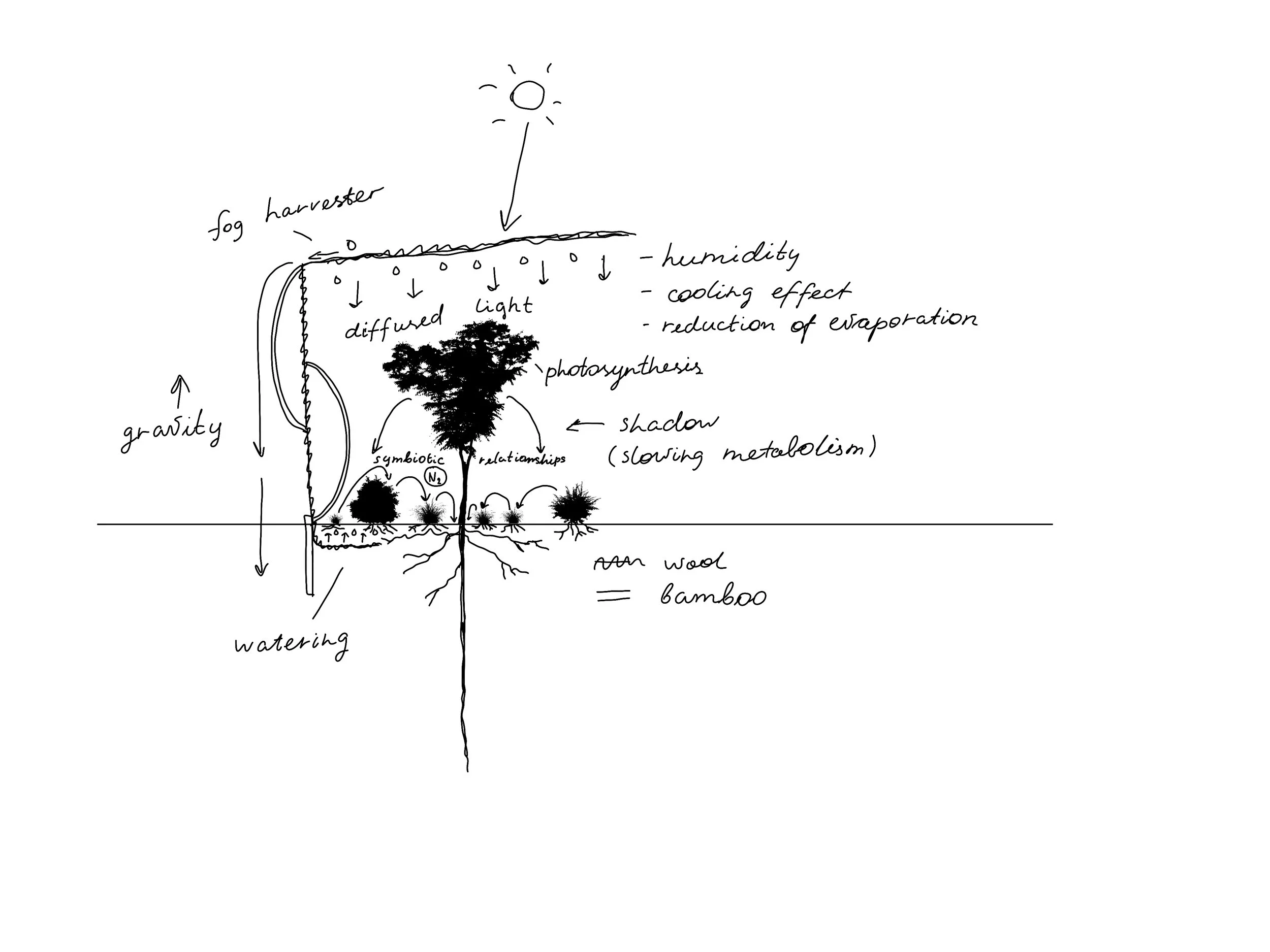
The shelter employs a tension-based structure and is designed as a highly effective fog and dew collector. By utilising principles of tensile architecture, the need for rigid construction is minimised, drastically reducing ecological invasiveness and ensuring the system is temporary and fully regenerative.
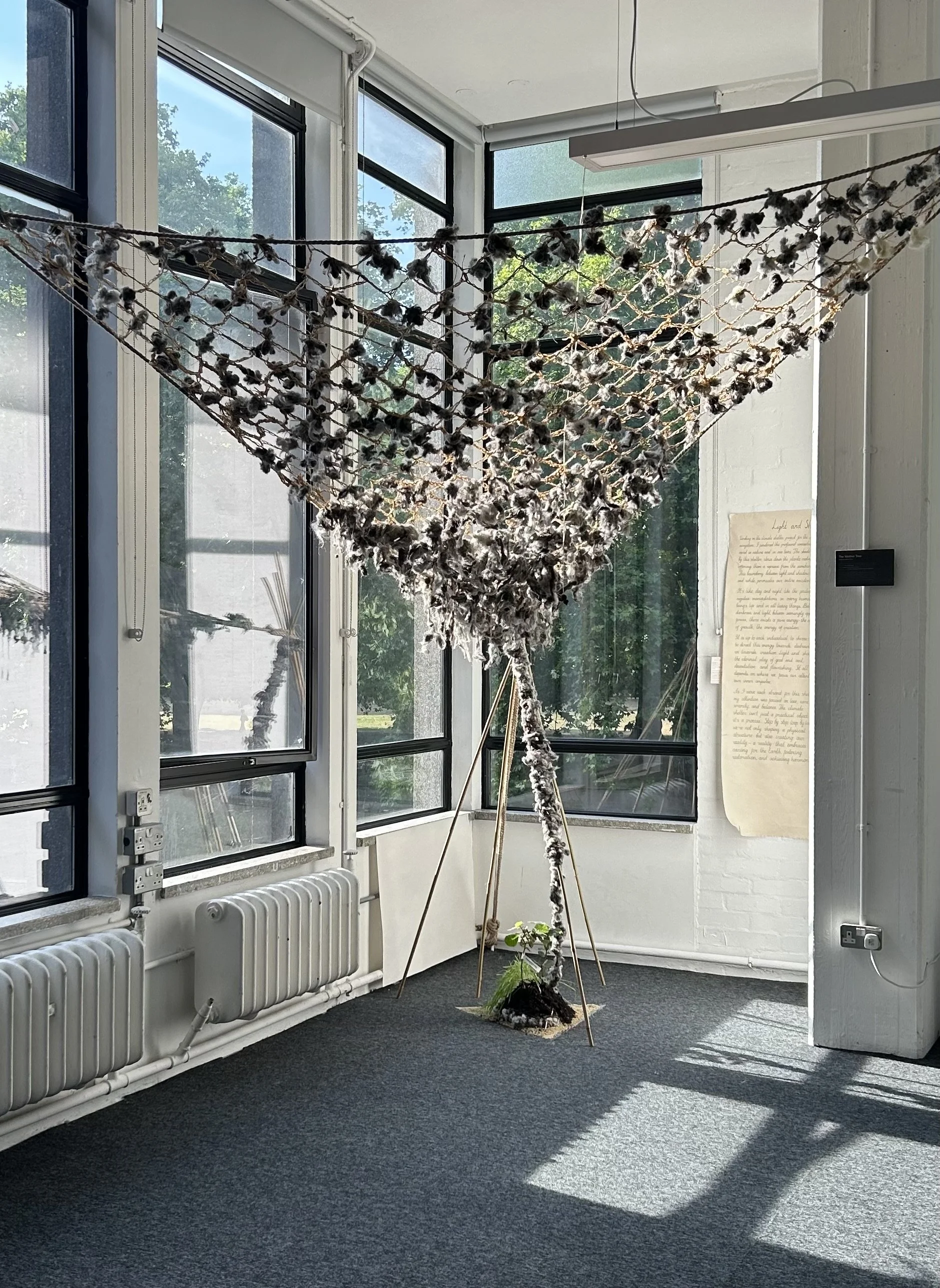
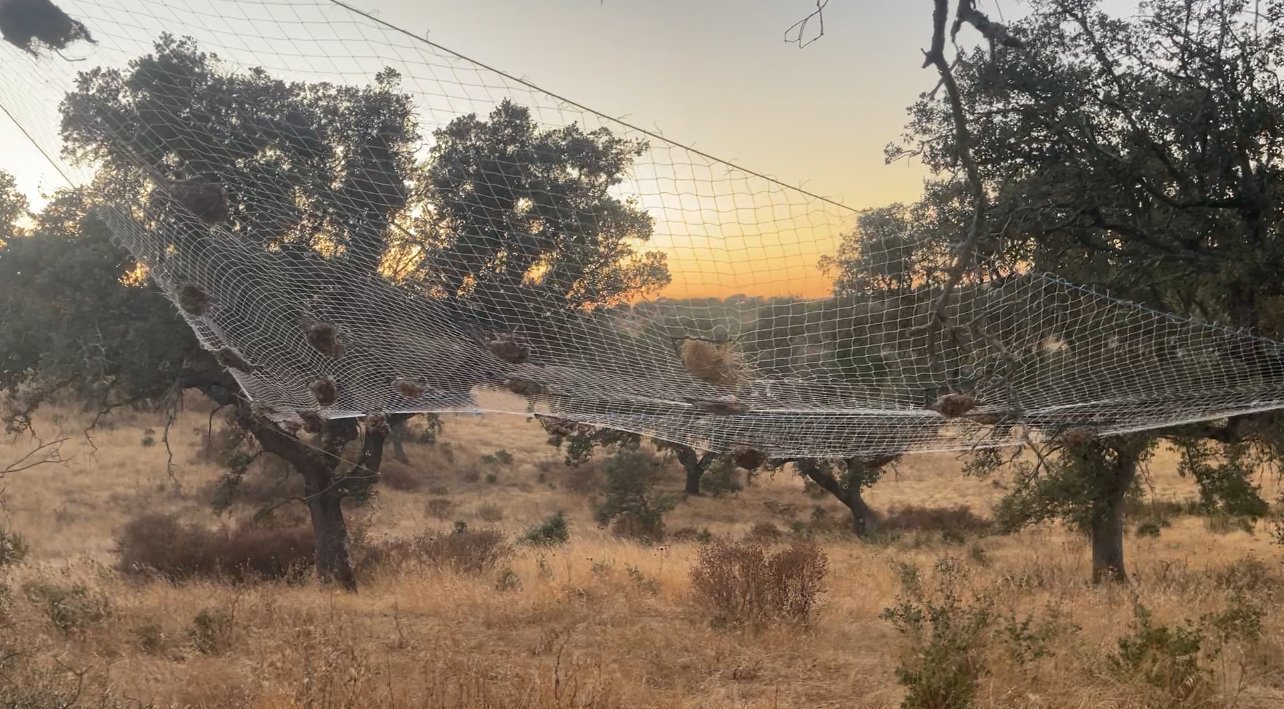
The full-scale prototype, featured prominently at the RCA Architecture Exhibition, demonstrates the system's core function: the combination of captured moisture and regulated shade successfully mitigates heat and drought stress, creating the optimal microclimate required for successful sapling establishment and long-term survival in vulnerable areas.
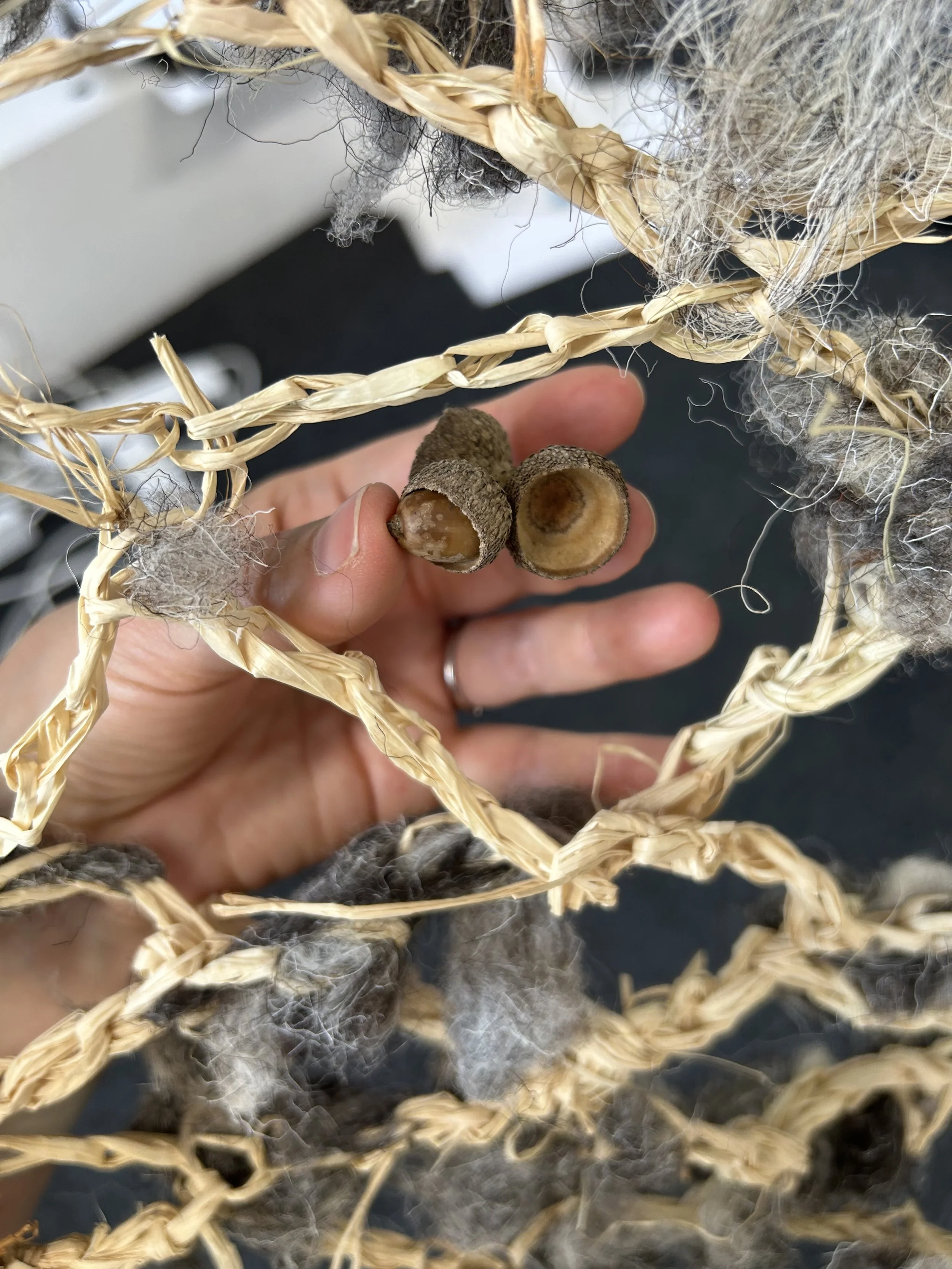
The woven textile’s open structure is precisely designed to allow natural reseeding, demonstrated here by the acorns passing through, while still creating the critical 'second canopy' for shade and microclimate regulation, ensuring the shelter actively supports the ecosystem’s self-regeneration.
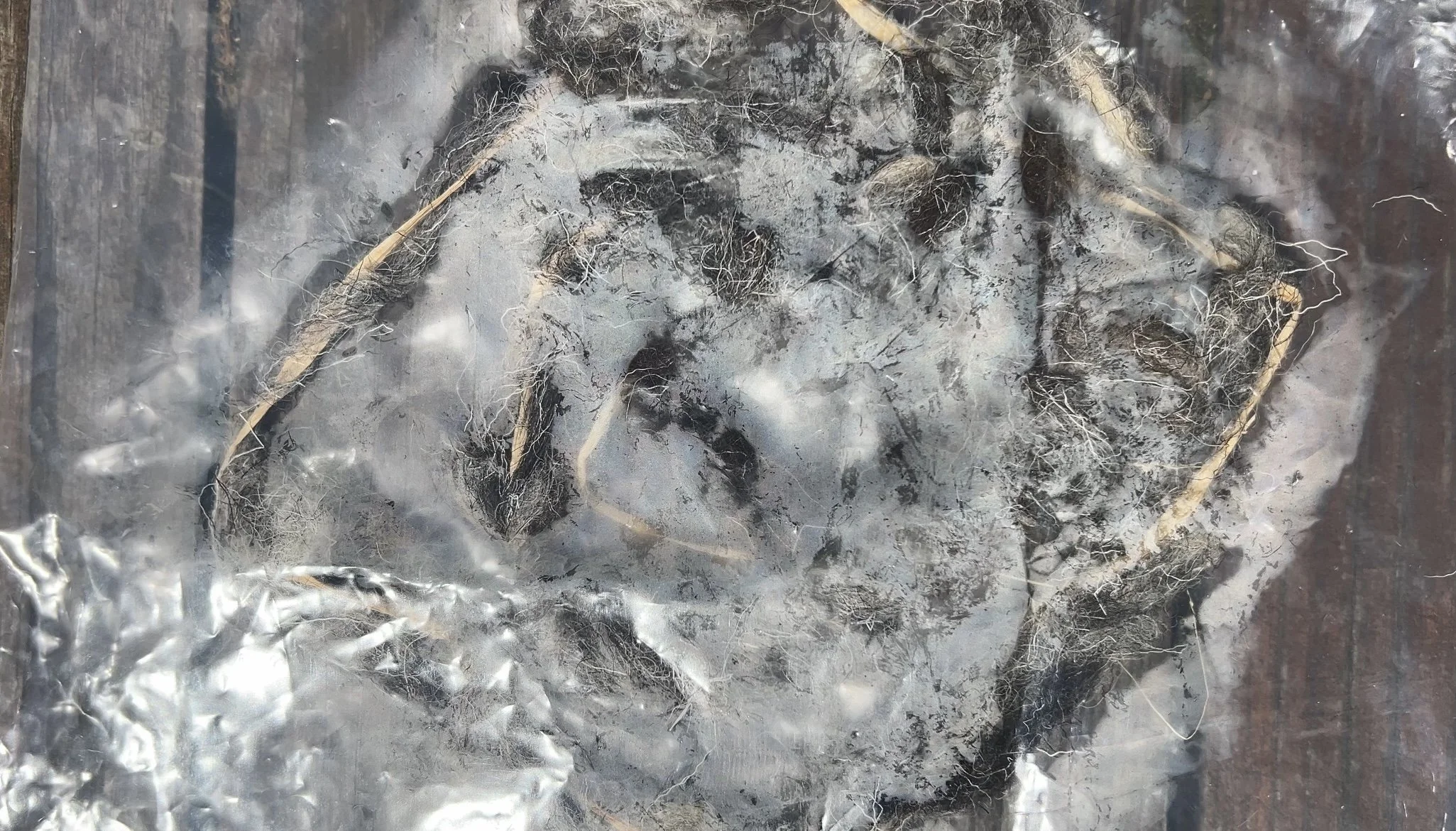
Low-grade wool, sourced from agricultural waste, possesses unique microscopic properties that allow it to capture moisture from the atmosphere. Field tests indicate that a single kilogram of this raw material can absorb and retain up to 11 litres of water, functioning as a vital, passive water source for saplings.
Quantitative Performance Metrics (The Results)
Initial field testing of the prototype demonstrated significant microclimate restoration within the shelter’s footprint, directly reducing heat and light stress on young plants. Key performance indicators include:
10%
Temperature Mitigation
3x
Radiation Control
Temperature Mitigation: A 10% decrease in topsoil temperature (from 17°C to 15.4°C), directly reducing heat stress.
Radiation Control: A three-fold decrease in direct sunlight intensity (from 1800 lumens to 548 lumens), preventing desiccation and optimizing photosynthetic efficiency.
Systemic Impact & ESG
The project provides a tangible demonstration of how design can drive systemic restoration:
Environmental (E): It actively restores the microclimate, reduces solar radiation, and utilises waste, leading to a regenerative cycle (waste-to-shelter-to-soil).
Social (S): The ‘know-how’ guide empowers small farmers with accessible, low-cost tools to protect their long-term livelihoods.
Governance (G): It establishes a framework for integrating core ESG principles (resource efficiency, land stewardship) into non-corporate, small-scale operations.
READY TO IMPLEMENT VERIFIED REGENERATION?
My methodology is proven to transition climate risk into verified material innovation and sustainable value. Let's discuss your strategic alignment.
Recognition & Validation
The interdisciplinary nature and environmental impact of the Smart Eco-Shelter have received significant recognition:
Selected for the Global Creative Graduate Showcase 2025 (Arts Thread, Google Arts & Culture, and Monaco Foundry).
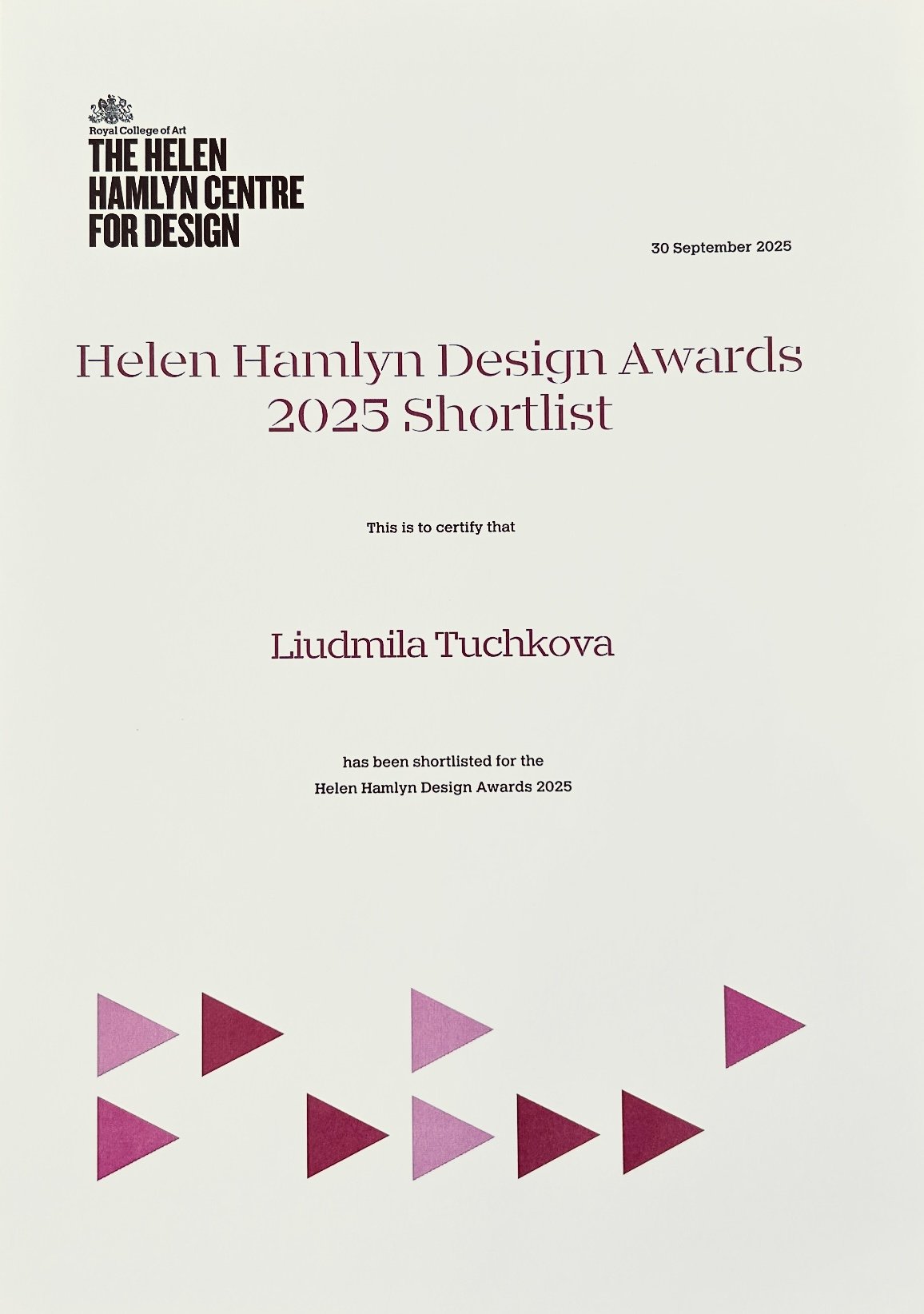
Master's Project Shortlisted for the Helen Hamlyn Design Awards 2025.
Nominated for the Head of Programme Prize by the Head of Environmental Architecture, RCA.
Featured Project in the RCA Architecture Exhibition